
The September running.news Brand Index: Performance Still Decides Who Moves
October 8, 2026

The September edition draws on several of running’s biggest stages.
UTMB and the Sydney Marathon tested trail and road credibility on the same weekend. The World Athletics Road Running Championships in Copenhagen produced a world record and a European record. Berlin began building toward another major collision of athletes, products, retail and culture.
The strongest brands did more than appear around those events. They connected athletic performance to a product, a distribution strategy or a larger business direction.
That distinction drives the September running.news Brand Index.
The Index measures current momentum across five factors: business performance, product innovation, athletic performance, retail and distribution, and cultural relevance. Each is scored out of 10 for a total of 50. The evidence window for this edition closed September 22.
The September Top 25

| Rank | Brand | Score / 50 | September direction |
|---|---|---|---|
| 1 | adidas | 41 | Up |
| 2 | ASICS | 41 | Up |
| 3 | Nike | 37 | Up |
| 4 | Brooks | 34 | Steady |
| 5 | Salomon | 34 | Up |
| 6 | On | 32 | Up |
| 7 | HOKA | 31 | Up |
| 8 | Saucony | 30 | Up |
| 9 | New Balance | 29 | Steady |
| 10 | Mizuno | 27 | New to Top 10 |
| 11 | KIPRUN | 27 | Up |
| 12 | PUMA | 26 | Down in rank |
| 13 | Merrell | 25 | Up |
| 14 | Altra | 23 | Steady |
| 15 | norda | 22 | Up |
| 16 | Skechers Performance | 21 | Up |
| 17 | Kailas | 21 | New |
| 18 | Topo Athletic | 20 | Down |
| 19 | Mount to Coast | 19 | Down |
| 20 | Diadora | 18 | Steady |
| 21 | 361° | 18 | Up |
| 22 | Li-Ning | 17 | Steady |
| 23 | NNormal | 17 | Up |
| 24 | inov-8 | 16 | Steady |
| 25 | Craft | 16 | Down |
Tied scores are separated by editorial judgment across the five factors. Rank is relative: a brand can improve its score and still lose a position if another brand builds momentum faster.
1. adidas — 41
adidas retains No. 1 by combining elite road performance, relevant product and commercial scale.

adidas athlete Peres Jepchirchir won the Sydney Marathon. Agnes Ngetich then set a women-only half-marathon world record of 1:05:15 in Copenhagen, subject to ratification. The launch of the Adizero Adios Pro 5 brought technology from the limited $500 Evo platform into a shoe available globally ahead of Berlin.
ASICS matched its score, but adidas wins the editorial tiebreak because its September evidence stretched across two major road stages, a record and a commercially available racing product.
2. ASICS — 41
ASICS produced the month’s broadest portfolio case.

Ben Dhiman won UTMB in the METAFUJI Trail 2, giving a relatively new trail racing platform immediate credibility. ASICS also occupied the commercial center of the Sydney Marathon as presenting partner while the event drew roughly 40,000 runners in its second year as a World Marathon Major.
Away from racing, ASICS announced plans to take its Japanese walking business, forecast to generate about $100 million in 2026, international through Moon Amble. That matters because the brand is using authority built in running to enter a much larger everyday movement market.
3. Nike — 37
Nike’s renewed focus on running is producing visible signs of progress, but the business recovery remains incomplete.

Andreas Almgren won the world half-marathon title in Copenhagen in a European record of 58:06, giving Nike an important result on a global road stage. Product activity and the rebuilding of wholesale and specialty relationships also support the score.
The restraint comes from the larger company. Nike was removed from the S&P 100 on September 21 after nearly 18 years, its turnaround remains uneven and Greater China continues to weigh on results. Running momentum is improving faster than the overall business.
4. Brooks — 34
Brooks holds fourth because reliability is still momentum when it is supported by evidence.

First-half sales rose 14%, while specialty leadership and a disciplined concentration on runners continue to give Brooks a defensible position. It did not generate the event-driven headlines of adidas, ASICS or Salomon this month, but it also did not produce evidence that justified weakening its score.
5. Salomon — 34
Salomon moves into a tie with Brooks after continuing to connect trail authority, road-running ambition and cultural relevance.
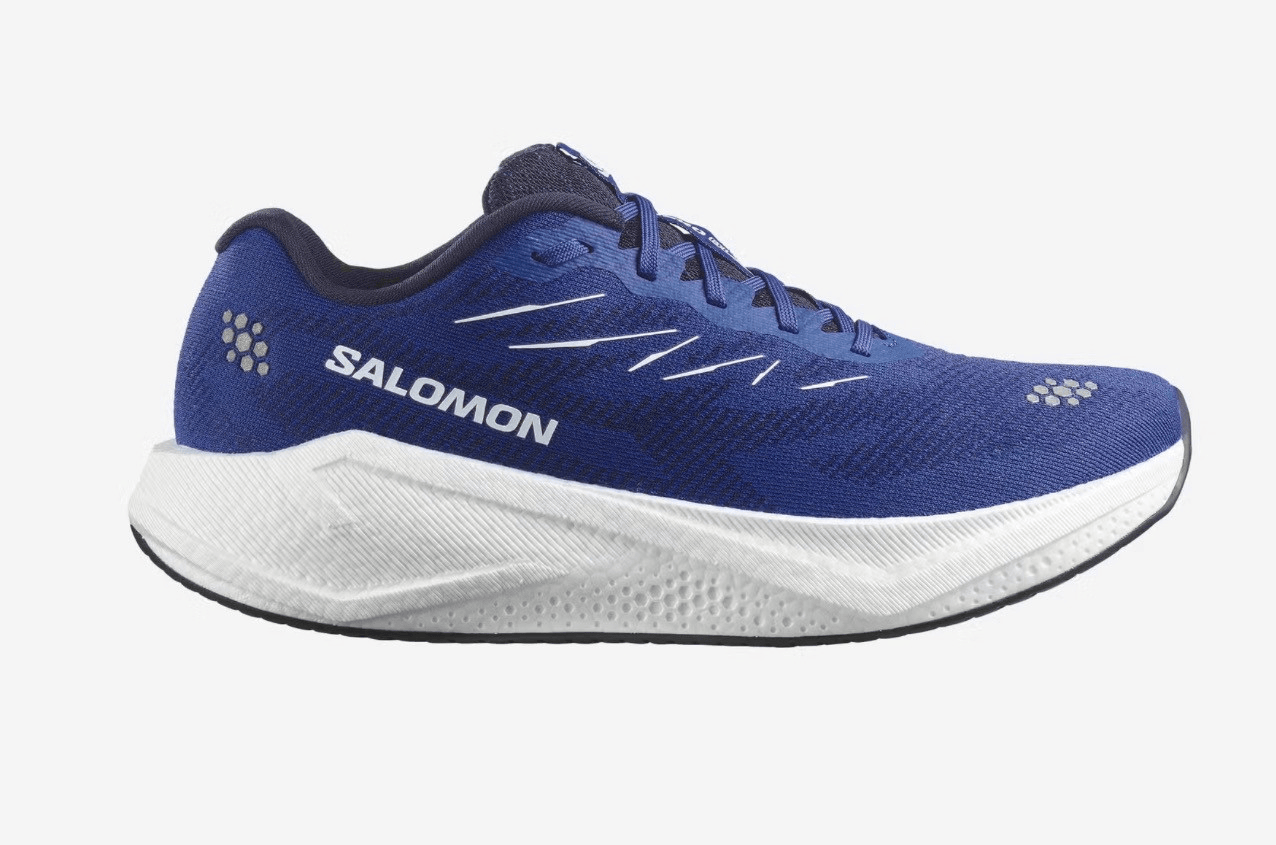
Its five-year global partnership with IRONMAN, beginning in 2027, creates a meaningful platform for expanding road footwear and apparel. At the same time, Salomon is trying to keep its fashion momentum rooted in technical performance rather than allowing lifestyle demand to define the brand.
Brooks retains the higher rank on the tie because its business and specialty-retail position are more established. Salomon has the greater upward pressure.
6. On — 32
On delivered September’s largest strategic statement.
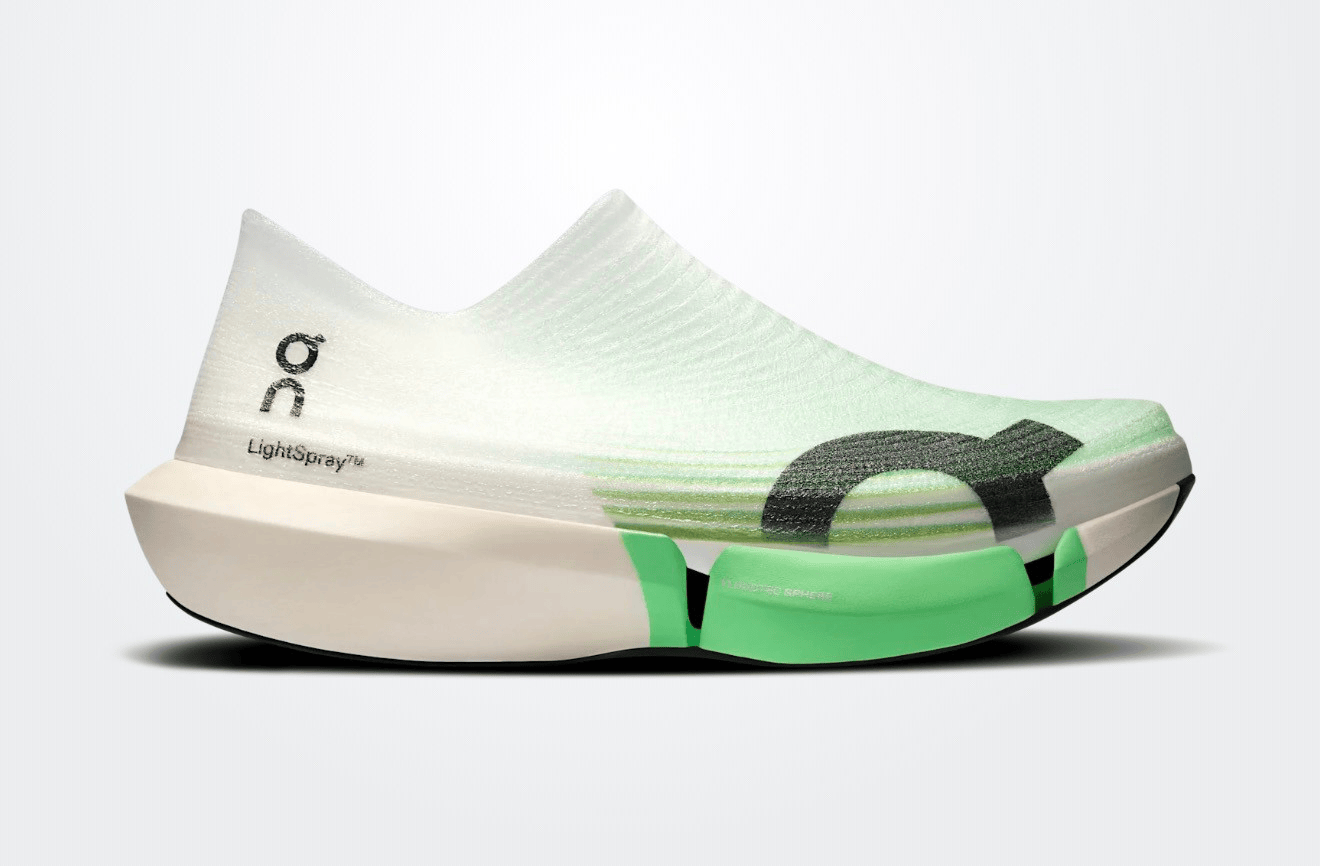
At its investor day, the company targeted at least CHF 5.6 billion in 2029 sales, an adjusted EBITDA margin of at least 22% and a share-repurchase program of up to $1 billion. It is also extending beyond running into football and golf while Baptiste Chassagne’s second place at UTMB preserved performance credibility.
The score rises, but not without qualification. Americas and wholesale growth have slowed on a constant-currency basis and expansion into new sports is still a plan that must be executed.
7. HOKA — 31
HOKA remains one of running’s most visible global brands and owned the largest branding platform at UTMB as title sponsor.

Its membership challenges on Strava also connect participation to rewards and direct customer relationships. The limiting factor is the absence of a fresh business or product result strong enough to move HOKA into the group above it.
8. Saucony — 30
Saucony continues to build a case that extends beyond performance running.

StockX identified it as the fastest-growing sneaker brand on its platform during the first half of 2026. Collaborations and revived archival models are creating cultural demand, while specialty-share gains and the Endorphin platform preserve running credibility.
This is not simply a lifestyle story. The value is that Saucony is gaining cultural relevance without abandoning the category that built it.
9. New Balance — 29
New Balance remains inside the Top 10 through product breadth and its ability to operate credibly across performance and lifestyle.
September, however, did not provide a defining new business, retail or racing signal comparable with those produced by the brands moving above it. The score stays level.
10. Mizuno — 27
Mizuno enters the Top 10 after sitting just outside it in August.
Double-digit fiscal first-quarter sales growth, a 33.1% increase in operating profit and the Wave Rider 30 reset give the brand evidence across business and product. Mizuno is quieter than several brands below it, but the Index rewards substantiated momentum rather than publicity volume.
11. KIPRUN — 27
KIPRUN generated one of September’s strongest athletic-performance cases.
Blandine L’Hirondel won UTMB in the KIPSUMMIT Race, becoming the first French woman to win the race in a decade. Jimmy Gressier’s European 5K road record and Thomas Cardin’s earlier 2026 trail results add depth to an increasingly credible elite program.
That moves KIPRUN upward and leaves it immediately outside the Top 10. The constraint is not performance. It is the amount of comparable public evidence currently available across brand-level sales, specialty-retail expansion and broader cultural adoption. KIPRUN and Mizuno finish with the same score; Mizuno takes the tiebreak through stronger disclosed business evidence.
What changed below the Top 10

PUMA falls to No. 12 even as its underlying running score improves. Project3, elite visibility and HYROX continue to matter, but the company’s broader reset and weaker business position keep it behind Mizuno and KIPRUN.
Merrell rises to No. 13 as trail participation, product depth and distribution keep it relevant beyond hiking. Altra holds at No. 14. norda moves to No. 15 as premium trail credibility and cultural demand continue to reinforce one another.
Kailas enters at No. 17. Its UTMB-week visibility and growing international trail presence were meaningful enough to move it into the wider Index, but not yet enough to place it alongside the larger commercial trail brands.
The lower half remains fluid. Skechers Performance, Topo Athletic and Mount to Coast have credible product stories, but need more evidence across retail, elite performance or business scale. Diadora, 361°, Li-Ning, NNormal, inov-8 and Craft remain within range because each owns a real position in performance running, even if its current momentum is narrower by geography or discipline.
What the major events changed
UTMB was this edition’s clearest multi-brand test. ASICS won the men’s race with Dhiman in the METAFUJI Trail 2. KIPRUN won the women’s race with L’Hirondel in the KIPSUMMIT Race. On placed second in the men’s race through Chassagne. HOKA owned the event platform. The week showed why race sponsorship, athlete performance and product credibility must be evaluated separately.
Sydney strengthened adidas through Jepchirchir’s victory and gave ASICS substantial visibility as presenting partner. Addisu Gobena’s 2:04:42 course record and Jepchirchir’s 2:18:31 victory also reinforced Sydney’s growing importance as a commercial and competitive stage.
Copenhagen delivered the freshest performance evidence. Ngetich’s 1:05:15 women-only world record lifted adidas; Almgren’s 58:06 European record strengthened Nike. KIPRUN athlete Jimmy Gressier did not podium there, which is why the brand’s September case rests more heavily on UTMB and his wider 2026 body of work than on Copenhagen alone.
Berlin arrives after this edition’s evidence cutoff. The Adios Pro 5 launch and any verified pre-race activity announced by September 22 are included. Race results and the full brand-activation picture will be evaluated in October. The Index does not award points for outcomes that have not happened.
How the Index works
The running.news Brand Index measures momentum, not size, awareness or media volume.
Brands are evaluated across business performance, product innovation, athletic performance, retail and distribution, and cultural relevance. Reported sales, verified race results, meaningful distribution expansion and category-shaping strategic moves carry the most weight. Routine colorways, teasers and repeated stories based on the same announcement carry little weight. Multiple articles generated by one press release count as one signal.
The result is intentionally resistant to monthly volatility. A major race win matters, but it does not erase weak business evidence. A strong quarter matters, but it does not automatically create product or cultural momentum. The brands that rise are the ones building across more than one dimension.
That is why adidas and ASICS can tie at the top, why Brooks can hold without dominating the news cycle, why PUMA can improve while losing rank and why KIPRUN can produce a historic victory without automatically entering the Top 10.
Momentum is relative. The standard keeps rising.
Evidence sources include official results and reporting from UTMB, World Athletics, the Sydney Marathon, ASICS, Amer Sports, Reuters, Vogue Business, GQ and brand financial disclosures. Evidence cutoff: September 22, 2026.
running.news — The business, culture, and future of running.